Map dead zones
A Wi-Fi range extender can make an office feel calmer, but it should solve a real coverage problem instead of adding another network device without a plan. The right choice depends on the router location, wall layout, number of users, backhaul quality, Ethernet needs, and whether staff can roam between rooms without thinking about the connection.
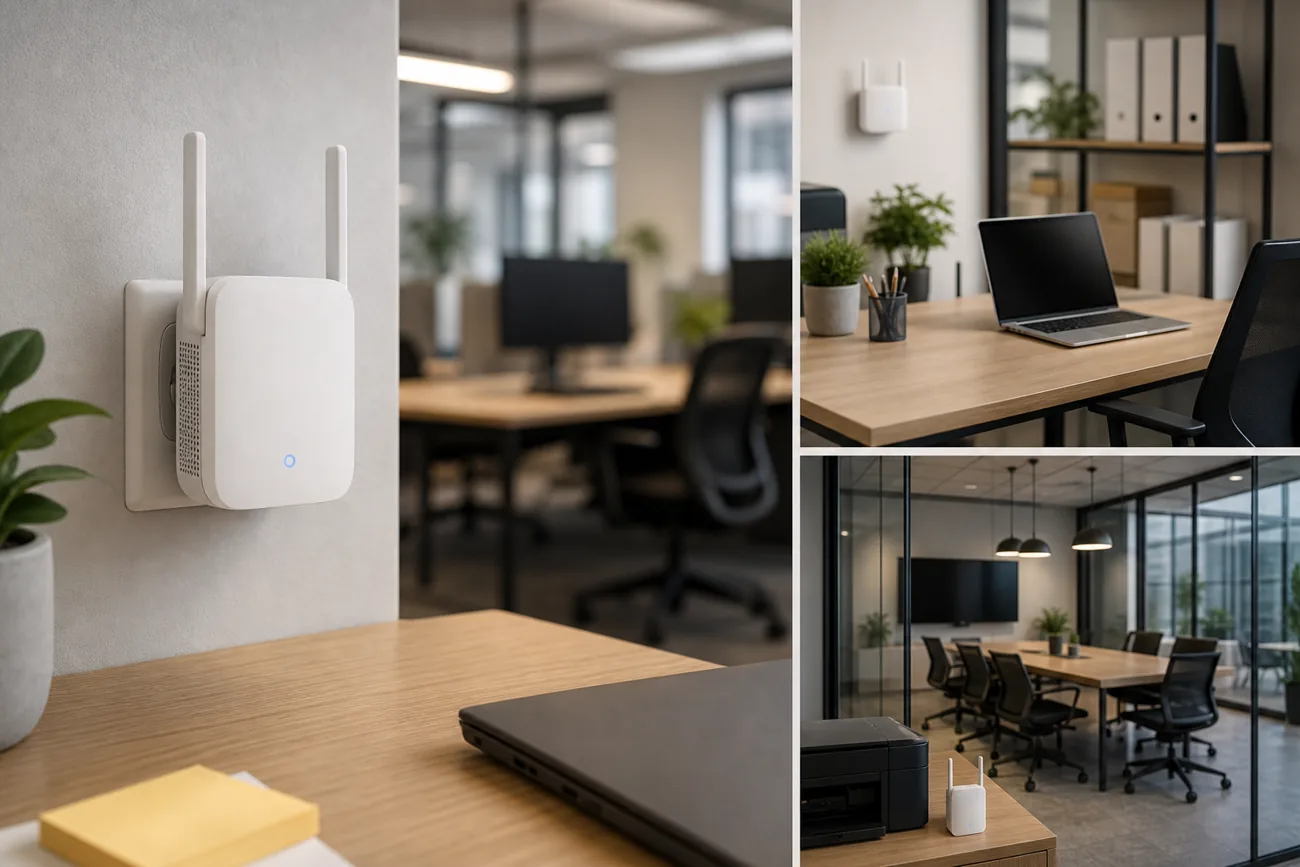
Coverage mapping is the first check. Walk the office with a phone and laptop, mark the rooms where calls drop, and place the extender between the router and the weak zone rather than inside the dead spot.
Before comparing prices, map the weak zone. Check where calls drop, which laptops complain, whether the issue appears near a conference room or printer corner, and whether the extender can sit in a strong enough middle location to repeat a healthy signal.
A good setup should feel boring after a few minutes: the extender connects cleanly, devices roam predictably, video calls stay steady, shared printers remain visible, and the office gets fewer complaints about one troublesome corner.
For ranked product choices, compare the LeStallion guide to 7 Best Wi-Fi Range Extenders for Offices.
Check speed and backhaul
A Wi-Fi range extender can make an office feel calmer, but it should solve a real coverage problem instead of adding another network device without a plan. The right choice depends on the router location, wall layout, number of users, backhaul quality, Ethernet needs, and whether staff can roam between rooms without thinking about the connection.
Speed depends on backhaul, channel congestion, and distance. A tri-band mesh extender may preserve more throughput, while a simple dual-band extender can be enough for light browsing and email corners.
Before comparing prices, map the weak zone. Check where calls drop, which laptops complain, whether the issue appears near a conference room or printer corner, and whether the extender can sit in a strong enough middle location to repeat a healthy signal.
A good setup should feel boring after a few minutes: the extender connects cleanly, devices roam predictably, video calls stay steady, shared printers remain visible, and the office gets fewer complaints about one troublesome corner.
A useful Wi-Fi range extender should make weak office coverage easier to live with, not create another fragile network device staff have to babysit.
Review roaming and setup
A Wi-Fi range extender can make an office feel calmer, but it should solve a real coverage problem instead of adding another network device without a plan. The right choice depends on the router location, wall layout, number of users, backhaul quality, Ethernet needs, and whether staff can roam between rooms without thinking about the connection.
Setup should be easy to maintain. Clear SSID choices, roaming behavior, firmware updates, admin access, and visible connection status matter more in offices than flashy app screens.
Before comparing prices, map the weak zone. Check where calls drop, which laptops complain, whether the issue appears near a conference room or printer corner, and whether the extender can sit in a strong enough middle location to repeat a healthy signal.
A good setup should feel boring after a few minutes: the extender connects cleanly, devices roam predictably, video calls stay steady, shared printers remain visible, and the office gets fewer complaints about one troublesome corner.
A useful Wi-Fi range extender should make weak office coverage easier to live with, not create another fragile network device staff have to babysit.
Plan Ethernet needs
A Wi-Fi range extender can make an office feel calmer, but it should solve a real coverage problem instead of adding another network device without a plan. The right choice depends on the router location, wall layout, number of users, backhaul quality, Ethernet needs, and whether staff can roam between rooms without thinking about the connection.
Ethernet ports can help printer corners, VoIP phones, point-of-sale desks, and small network cabinets. A wired jack on the extender may be more useful than another wireless-only spec.
Before comparing prices, map the weak zone. Check where calls drop, which laptops complain, whether the issue appears near a conference room or printer corner, and whether the extender can sit in a strong enough middle location to repeat a healthy signal.
A good setup should feel boring after a few minutes: the extender connects cleanly, devices roam predictably, video calls stay steady, shared printers remain visible, and the office gets fewer complaints about one troublesome corner.
A useful Wi-Fi range extender should make weak office coverage easier to live with, not create another fragile network device staff have to babysit.
Plan network security
A Wi-Fi range extender can make an office feel calmer, but it should solve a real coverage problem instead of adding another network device without a plan. The right choice depends on the router location, wall layout, number of users, backhaul quality, Ethernet needs, and whether staff can roam between rooms without thinking about the connection.
Network fit matters in offices. Band support, WPA settings, guest-network rules, firmware updates, and admin permissions can decide whether the extender stays reliable and safe to manage.
Before comparing prices, map the weak zone. Check where calls drop, which laptops complain, whether the issue appears near a conference room or printer corner, and whether the extender can sit in a strong enough middle location to repeat a healthy signal.
A good setup should feel boring after a few minutes: the extender connects cleanly, devices roam predictably, video calls stay steady, shared printers remain visible, and the office gets fewer complaints about one troublesome corner.
A useful Wi-Fi range extender should make weak office coverage easier to live with, not create another fragile network device staff have to babysit.
Fit the office layout
A Wi-Fi range extender can make an office feel calmer, but it should solve a real coverage problem instead of adding another network device without a plan. The right choice depends on the router location, wall layout, number of users, backhaul quality, Ethernet needs, and whether staff can roam between rooms without thinking about the connection.
Placement is practical but important. Wall height, outlet location, metal cabinets, thick doors, glass rooms, and hallway turns can weaken a signal before any speed rating matters.
Before comparing prices, map the weak zone. Check where calls drop, which laptops complain, whether the issue appears near a conference room or printer corner, and whether the extender can sit in a strong enough middle location to repeat a healthy signal.
A good setup should feel boring after a few minutes: the extender connects cleanly, devices roam predictably, video calls stay steady, shared printers remain visible, and the office gets fewer complaints about one troublesome corner.
A useful Wi-Fi range extender should make weak office coverage easier to live with, not create another fragile network device staff have to babysit.
Office connectivity note 1
A Wi-Fi range extender can make an office feel calmer, but it should solve a real coverage problem instead of adding another network device without a plan. The right choice depends on the router location, wall layout, number of users, backhaul quality, Ethernet needs, and whether staff can roam between rooms without thinking about the connection.
The best Wi-Fi range extender matches the real office problem: weak room coverage, stable roaming, enough throughput, clean management, sensible security, and a placement that staff will not accidentally unplug.
Before comparing prices, map the weak zone. Check where calls drop, which laptops complain, whether the issue appears near a conference room or printer corner, and whether the extender can sit in a strong enough middle location to repeat a healthy signal.
A good setup should feel boring after a few minutes: the extender connects cleanly, devices roam predictably, video calls stay steady, shared printers remain visible, and the office gets fewer complaints about one troublesome corner.
Office connectivity note 2
A Wi-Fi range extender can make an office feel calmer, but it should solve a real coverage problem instead of adding another network device without a plan. The right choice depends on the router location, wall layout, number of users, backhaul quality, Ethernet needs, and whether staff can roam between rooms without thinking about the connection.
The best Wi-Fi range extender matches the real office problem: weak room coverage, stable roaming, enough throughput, clean management, sensible security, and a placement that staff will not accidentally unplug.
Before comparing prices, map the weak zone. Check where calls drop, which laptops complain, whether the issue appears near a conference room or printer corner, and whether the extender can sit in a strong enough middle location to repeat a healthy signal.
A good setup should feel boring after a few minutes: the extender connects cleanly, devices roam predictably, video calls stay steady, shared printers remain visible, and the office gets fewer complaints about one troublesome corner.
Office connectivity note 3
A Wi-Fi range extender can make an office feel calmer, but it should solve a real coverage problem instead of adding another network device without a plan. The right choice depends on the router location, wall layout, number of users, backhaul quality, Ethernet needs, and whether staff can roam between rooms without thinking about the connection.
The best Wi-Fi range extender matches the real office problem: weak room coverage, stable roaming, enough throughput, clean management, sensible security, and a placement that staff will not accidentally unplug.
Before comparing prices, map the weak zone. Check where calls drop, which laptops complain, whether the issue appears near a conference room or printer corner, and whether the extender can sit in a strong enough middle location to repeat a healthy signal.
A good setup should feel boring after a few minutes: the extender connects cleanly, devices roam predictably, video calls stay steady, shared printers remain visible, and the office gets fewer complaints about one troublesome corner.
Deep-dive subpages
Previous cloud reference
This Surge guide follows the previous Vercel page about smart plugs for office automation. For current product comparisons, use the LeStallion Wi-Fi range extenders guide.